
Simon Bennett, writes this blog about the financial loss he has suffered through the ignorance of the love of cars.
Ok, before I dig deep into this, let me get one thing straight: I’m talking about the daily drivers. The school-run shuttles, the back-and-forth commute, the 12,000-miles-a-year workhorses. I’m not even including the costs of servicing, maintenance, tax, or insurance in the figures below, this is purely about the “hole in the pocket” that is depreciation and monthly payments.
I admit it: I have a ridiculous addiction. When I get bored, I buy another car. But looking back at my history of daily drivers, I’ve realised this familiar practice is just a complete waste of money.
The £17,000 “Lightbulb Moment”
The catalyst for this blog was a conversation with my stepfather, David. Just under three years ago, he bought a brand-new electric Nissan for £27,000. Recently, he became uncomfortable after reading about potential battery replacement costs exceeding £13,000, so he looked into trading it for a Hybrid Toyota Yaris priced at £24,000.
To his shock, he was offered just £10,000 for his Nissan.
Despite having covered only 9,000 miles in three years, the car had lost £17,000 in value. It seems some electric car values are falling like a stone, often losing significantly more than the average 50–60% expected for most new cars in their first three years. I managed to talk him out of it, trading that car would be like throwing £50 notes into a fire pit. Instead, I convinced him to buy a top-of-the-range 65-inch TV and keep the Nissan. Job done, and £14,000 saved.
My Hall of Shame: A Decade of Leasing
Looking back at my own history, I’ve been just as guilty of burning cash. Between 2006 and 2015, I spent a staggering £38,652 on lease deals, Simon said:
- 2006–2009 (Lexus IS): £12,121 total
- 2009–2012 (Audi A5): £17,901 total
- 2012–2015 (Mercedes E-Class): £19,539 total
At the end of those nine years, I had completely nothing to show for it. No asset, no equity, just a very expensive way to buy someone else’s car.
The “Impractical” Phase
In 2016, I tried to break the cycle by buying a second-hand BMW Z4 for £21,000. It was fun, but thirsty and the two-seater life didn’t suit my business needs. When I traded it in a year later, I lost another £4,000.
I moved into a new Audi Avant for £33,000. It was practical and “cool-ish,” but ultimately a bit boring. Three years later? Another £10,000 gone in depreciation.
Even my rural “sensible” purchase a Range Rover for £11,000 cost me £2,500 in a year because I lived in constant fear of the crankshaft snapping or the electronics failing, a common anxiety in enthusiast circles.
The Pocket Rocket & The Final Straw
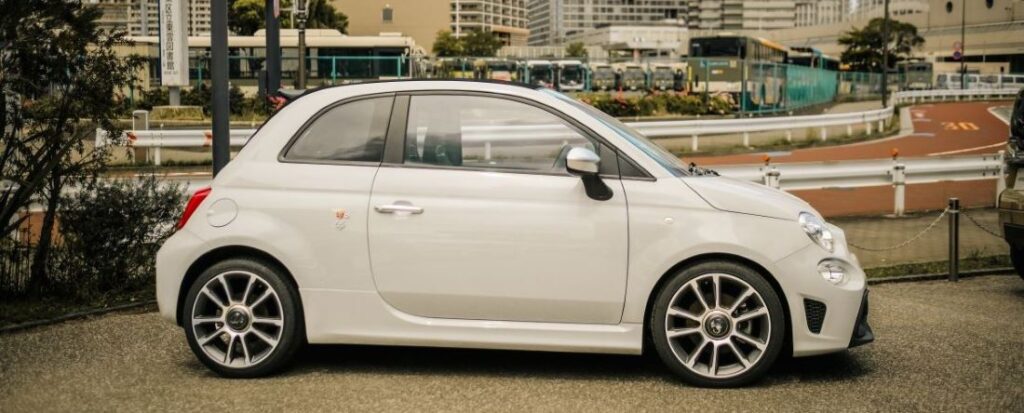
By 2022, working from home meant I only covered 6,000 miles a year. I bought a Fiat 500 Abarth for £14,000. It was an absolute “pocket rocket,” but the build quality felt like a baked bean tin. My wife hated it, fearing for my safety every time I passed a 38-tonne lorry. I sold it 18 months later for £9,800, another £4,200 loss.
The Strategy: Beating the Curve
When I added it all up, I’ve wasted an average of £4,000 per year for 18 years. That is simply ridiculous.
So, what is the solution for someone doing 6k–8k miles a year who still wants a reliable, stylish car?
- Don’t lease: It’s a guaranteed loss.
- Don’t buy brand new: You lose 20% the moment you drive off the forecourt.
- Buy at the bottom of the curve: Look for a car that has already lost the bulk of its residual value.
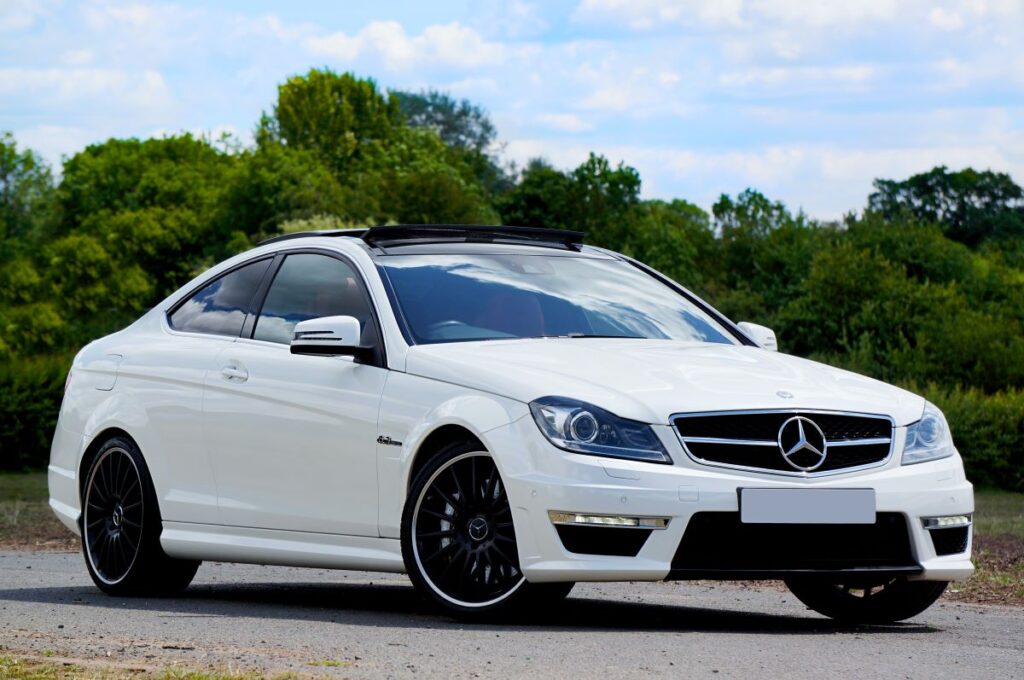
My choice is a Mercedes E-Class 350 CDI Coupe. It’s stylish, relatively low mileage, and a fantastic cruiser. I picked up a near-immaculate example with a full Mercedes history for just £8,000. While £8,000 is still a lot of money, compared to the tens of thousands I’ve wasted in the past, it’s an absolute bargain.
Like Simon, have you fallen victim to the “new car” money pit? Does the cost of depreciation bother you, or is the “new car smell” worth the price tag?
Let me know your thoughts in the comments, I’m off to polish my classics… at least they’re worth every penny!

Leave a Reply